
Giving students scaffolded resources to help reduce the cognitive difficulties and allowing them to focus on the key concept you are wanting them to build confidence in is important. New syntax, new layout (indentation) and recalling previous content are some of the challenges. Customisable algorithm questions with a mixture of Parsons Problem and gap fill (cloze) based approaches is a potential way to help.
Some sites have existed that allowed aspects of this to work, as a teacher you create resources and save links in your class resources and then the site disappears. That is why I have been building a platform that allows users to create both types of questions and for the Cloze type, gaps can be free text fill or multiple choice (with customisable distractors) and optional hints for either type of gap.
All images in this article are taken from these 2 questions on CodingQuestion.com.
Question structure#
Question descriptions support markdown formatting.
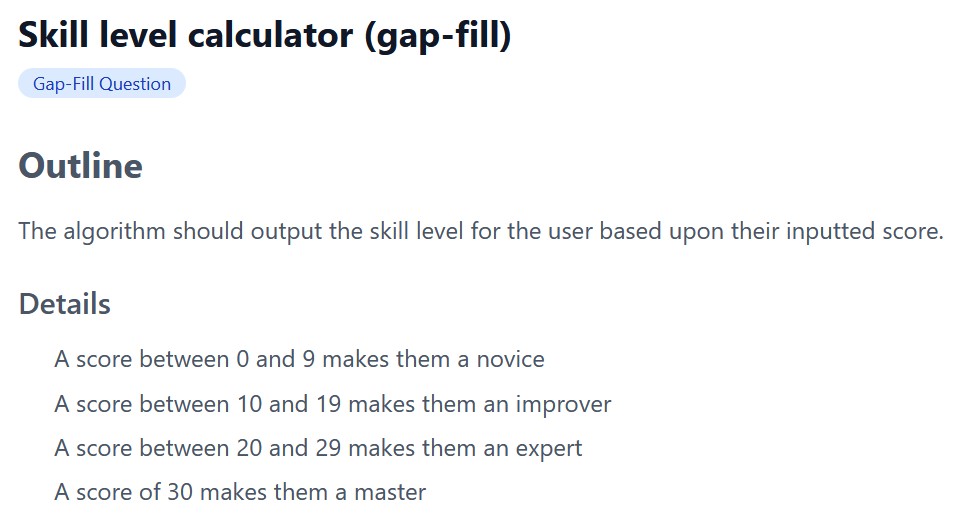
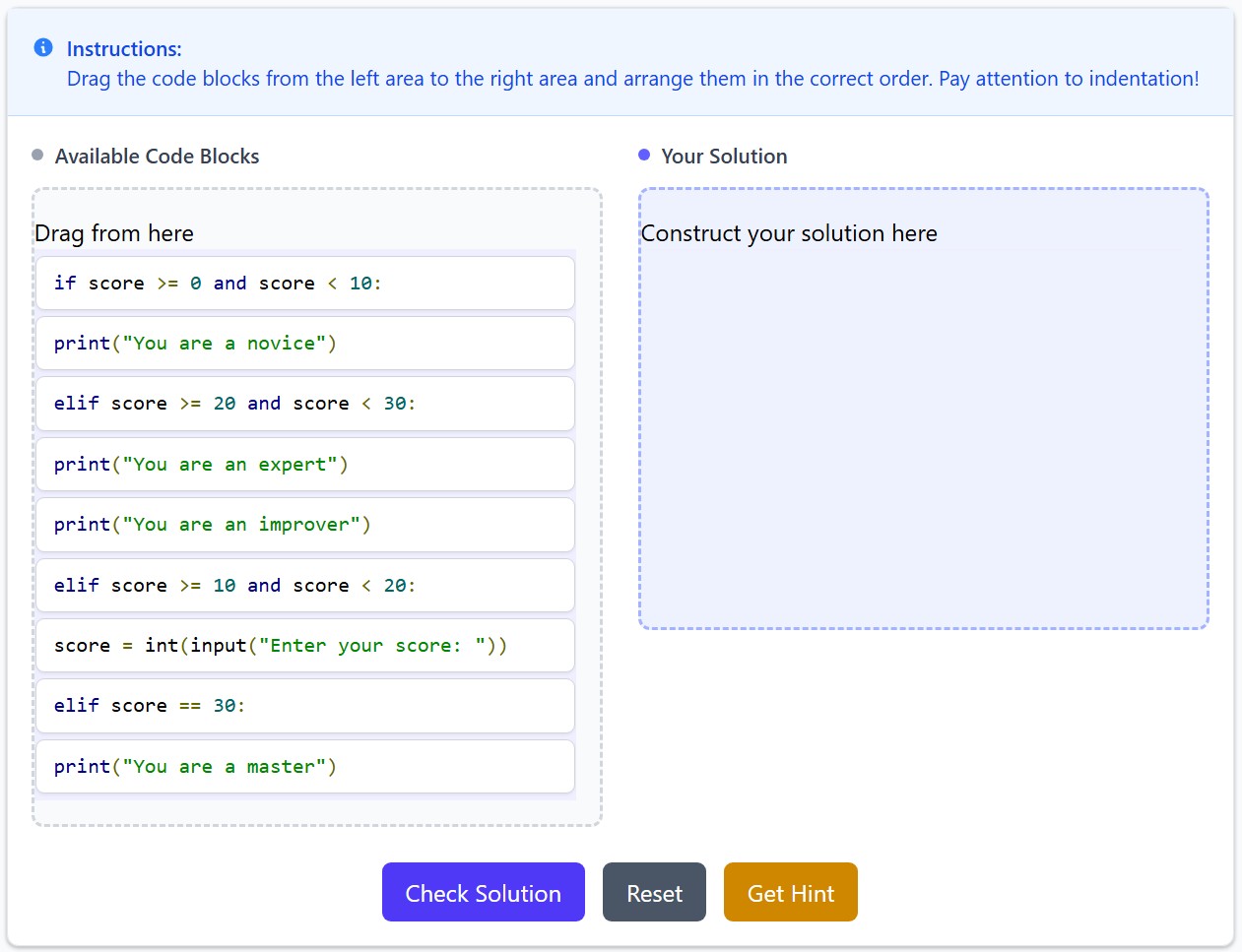
Here are 2 examples of the interactive student view, where they answer the question. You can see a gap fill question (with a mixture of multiple choice & free text gaps (cloze)) along with a Parsons Problem style question.
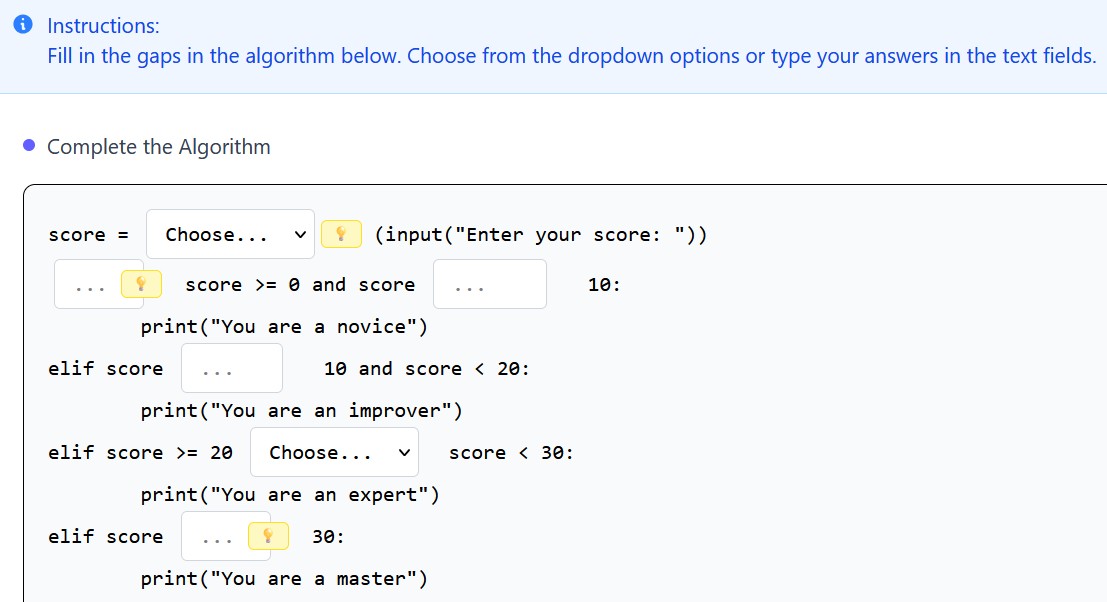
Gap fill question#
Gap fill (cloze) questions can contain 2 different types of gap. They are free text and multiple choice gaps.
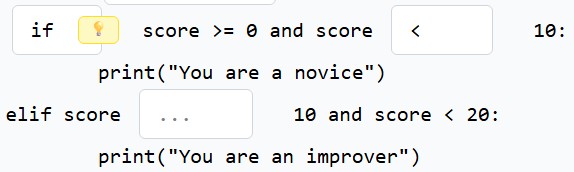
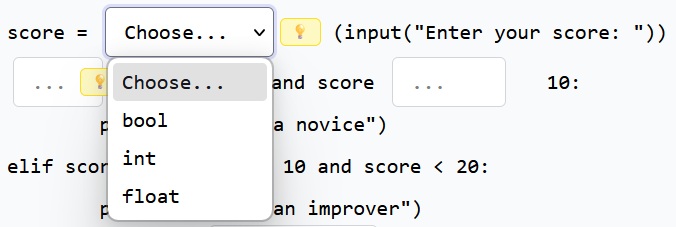
A free text gap is a gap that allows the student to enter text. Whereas a multiple choice gap has a preset list of options to select from, including customisable distractors.
Tip
Free text gap#

Multiple choice gap#
A multiple choice gap with customisable distractors.


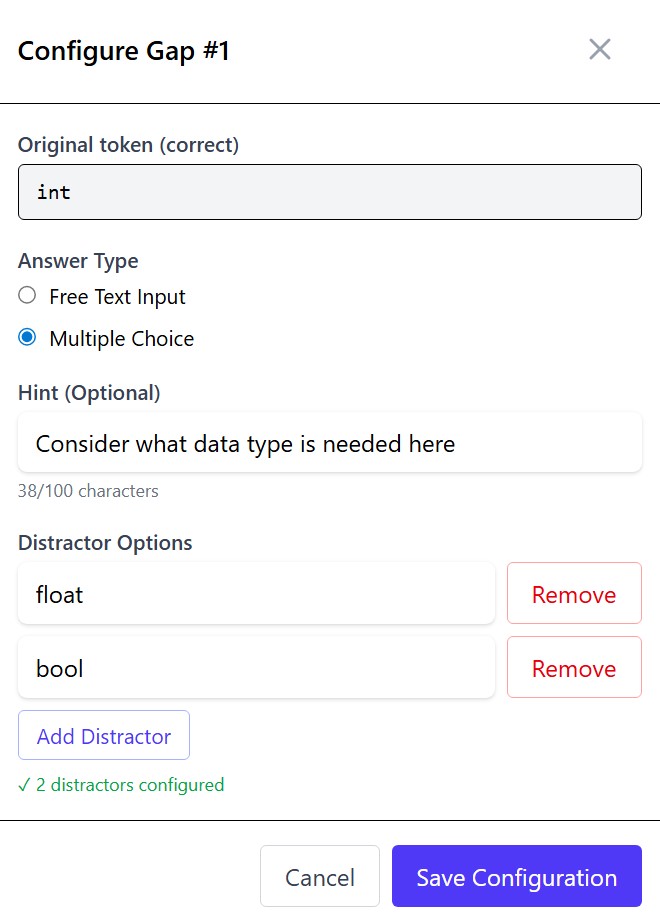
Customisable distractors#
Here is an example of configuring a multiple choice gap with customisable distractors.
Optional hints#
Optional hints can be added to either type of gap, they are limited to 100 characters per gap.
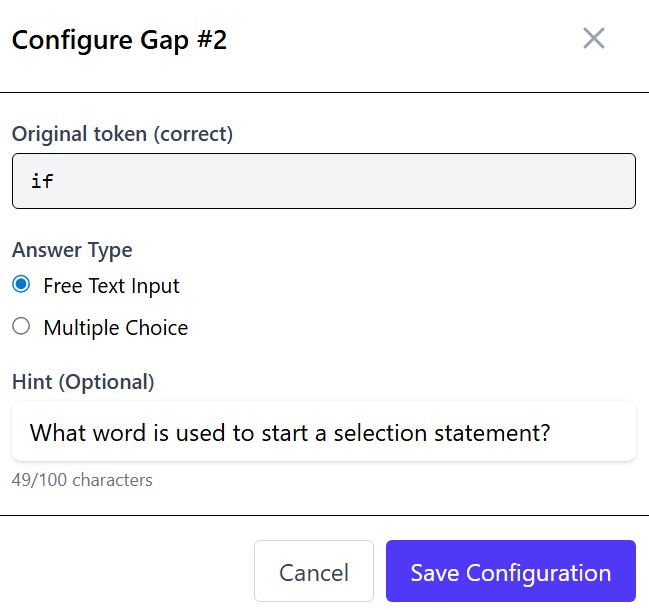
This is the view when a student clicks on the yellow bulb icon to view a hint.

Parsons Problem question#
These types of questions are where the correct algorithm is provided to the student. However, it is jumbled up and indentation is removed. Their job is to drag the code fragments/blocks to the right-hand panel and construct the correct sequence with accurate indentation.
Tip
Pedagogical use#
Both types of questions can be used to teach students algorithmic thinking. The Parsons Problem question is a good way to teach students the correct sequence of algorithmic steps. The gap fill (cloze) question is a good way to focus on particular learning points or provide deliberate practice of common misconceptions. Using a mixture of free text, multiple choice gaps and hints can help scaffold and challenge students in a wide range of ways.